
 |
||||||||||||||||||||||||||||
 |
|
|
||||||||||||||||||||||||||
|
In this issue
Latest Feed Info 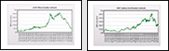
LIFFE nearby wheat futures have been stable this week around the £102/t mark following falls the previous week. F.O. Lichts forecast the world ‘09/10 wheat crop to be 5Mt higher than the previous estimate but 3% lower than last season, at 663Mt. The increased estimate follows revisions for Russia (+3Mt), Denmark (+1.8Mt) and the US (+1Mt). US soyabean crushings were lower in September, as a result of tight old crop supplies. . Argentine soyabean plantings are due to start towards the end of this month and are expected to reach a new record of 19 to 20Mha. Current conditions are favourable due to a mild El Nino and production is forecast to rise to between 48 and 55Mt (32Mt ‘08/09). For more feed information, click here. 
Latest Link Updates ZNCPigs Scheme
Contact Details Call: 02476 692051 Email: [email protected] Web: www.bpex.org.uk Other BPEX Sites www.pigsareworthit.com |
BPEX Weekly: October 23 2009 Marketing NewsSausage Week Gathers Pace
Missing Link, the British Sausage Appreciation Society (BSAS) newsletter, has been sent to all BSAS members. To download your own copy click here. Launch day, 2nd November, will see a variety of BBC radio stations receiving sausage sarnies for the presenters, including morning shows such as Wake up to Wogan and drive time shows like Chris Evans, plus the major London stations. Keep checking the website www.britishsausageweek.com for up to date info. Promotional material is currently being distributed to over 1500 butchers and 170 Tesco stores. This includes posters, a banner, stickers, recipe cards and dispensers. For an example of a poster click here. If you require a promotional kit and have not already ordered one please email [email protected]. To see this years new recipes click here. Back to Top |
|||||||||||||||||||||||||||




Abattoir |
Date |
Vion Malton |
Monday 2 November |
Tulip Westerleigh |
Monday 2 November |
Cranswick – Hull |
Tuesday 3 November |
Tulip Spalding |
Tuesday 3 November |
H G Blake |
Wednesday 4 November |
Ensors |
Wednesday 4 November |
Woodhead Bros Colne |
Wednesday 4 November |
Cranswick – Bowes |
Thursday 5 November |
Tulip Ashton |
Thursday 5 November |
Woodhead Bros Splading |
Friday 6 November |
Cheale |
Friday 6 November |
Vion Wiveliscombe |
Friday 6 November |
Eastern Health Project Under Way
Eastern Health, the East of England health improvement project, is set to get underway having been given the go-ahead by the East of England Development Agency (EEDA) and BPEX. Never wanting to let the grass grow under their feet, producers in East Anglia have already set up a steering group and held a first meeting to discuss strategy, so the initiative can get off to a flying start. The steering group is chaired by Philip Richardson.
The commitment to disease control in the East is already clear from the innovative Swine Dysentery Producer Charter set up in 2008, which has seen the number of new cases of swine dysentery fall off dramatically in 2009. At the first Steering Group meeting there was a strong motivation in the producers present to develop regional plans with an emphasis on attaining real improvements in biosecurity. A veterinary sub-committee has been formed to advise on biosecurity and health status monitoring.
Producers in the region can get in touch with Charlotte Evans at BPEX for more information on Eastern Health on 02476 478796 / 07800 850344 or email [email protected].
National News:
Production Cost Report
The latest in a series of annual reports examining the relative costs of pig meat production up to farmgate level in selected EU countries will be available shortly.
Pig Cost of Production in Selected Countries points out that 2008 marked the return to profitability of the European pig sector. The British pig industry also benefited from a substantial fall in the sterling exchange rate, which had two positive effects: it led to an improvement in the relative competitiveness of Great Britain pig production and it boosted pig prices through its impact on import and export levels.
Some of the key points in this report:
- The cost of pig meat production in Great Britain production increased by 12 per cent in 2008, to 136.8p/kg. The average cost of production in the EU was 135.9p/kg dw, up 24 per cent. Production costs in Great Britain were therefore much closer to the EU average than in previous years, when we had been one of the highest-cost countries.
- The improvement in the relative cost of production in Great Britain was in part due to improved physical performance, but it was mainly due to the lower exchange rate.
- In 2008 as a whole, EU feed costs increased by 34 per cent compared with a year earlier, in sterling terms, although they were just 18 per cent higher in Euro terms. The cost increase (in sterling) was 25 per cent in Great Britain
- The average number of pigs finished/sow in Great Britain increased for the fifth consecutive year in 2008. At 20.9 pigs/sow, average performance was 0.7 pigs (4%) higher than in 2007 and 2.0 pigs (11%) higher than in 2004. This was the highest annual improvement recorded for at least 15 years
The report is free to English pig levy payers. If you would like a copy, email [email protected]
LANTRA Skills Assessment
At an event for Members of Parliament and Peers in the House of Commons, Lantra launched its latest research report: A Skills Assessment for the Environmental and Land-based Sector.
The research sets out the skills gaps and shortages of the current workforce and identifies the projected skills needs through to 2017. It is based upon a comprehensive review of changes and evidence that has emerged over the past year. The report provides the vital labour market intelligence to ensure that government, employers, individuals and other stakeholders are able to make appropriate investments in skills so that this vital sector can thrive and grow.
Using the research data, a series of factsheets has been produced for each nation and for individual industries on a UK basis. To view the final report and the factsheets please click here.
Dairy Co-product
Are any pig producers interested in 5,000 litres of dairy co-product a week, from Milton Keynes? If so contact Carli at MT Waste on 0870 2407722.
Source: NPA Website
GM Authorisation Latest
Calls from farms commissioner Mariann Fischer Boel last week for farm ministers to act more responsibly over GM authorisations were ignored (again) at this week’s European farm council meeting.
Last week Fischer Boel ridiculed ministers who on the one hand abstained from voting on GM authorisations, and then came to Brussels with begging bowls, asking for help for their farmers hit by high feed costs.
In a very brief discussion, this week’s farm council meeting failed to authorise three maize varieties for import and processing.
Had approval been given, shipments of soya from the States would not have been blocked on arrival in Europe ports if traces of any of the three varieties had been found in their holds.
Despite the fact that imports of soya from the States have been suspended by shippers, because of the risk of the loads being blocked on arrival, the failure of the three varieties to be approved attracted almost zero comment at the farm council meeting.
Stocks of Argentine and Brazilian stocks are very low.
International News:
No More Swine Flu
The National Newspaper Association in America is urging its members to drop "swine flu" and use H1N1 to properly identify the virus during coverage of the associated pandemic, according to the National Pork Board.
Cheryl Kaechele, publisher of the Allegan County News in Allegan, Michigan, reportedly told members that newspaper coverage referring to H1N1 as "swine flu" has "unfairly cast doubt upon the pork industry". NNA is a nonprofit trade association that represents the owners, publishers and editors of 2,400 daily and weekly community newspapers.
National Pork Board President Tim Bierman said he sent a letter to Kaechele thanking her for addressing an issue that is crucial to the nation’s 70,000 pork producers. He noted he’d sent a letter to top executives of 25 of the country’s leading media outlets asking them to do what Kaechele did.
Antibiotic Resistance
Suggesting that antibiotic resistance primarily stems from antibiotic abuse or misuse doesn’t accurately tell the whole story, according to a report by the American Academy of Microbiology. The group says even appropriate antibiotic use has, among other causes, contributed to the spread of resistance, underscoring the complexity of explaining its causes.
"There are no scapegoats," states the report, "Antibiotic Resistance: An Ecological Perspective on an Old Problem," which is based on a colloquium convened by AAM in October 2008. "Responsibility is partly due to medical practice, including patient demand; veterinary practice; industrial practices; politics; and antibiotics themselves. Ultimately, resistance development is founded in the inevitability of microbial evolution."
The report states further that antibiotic resistance is essentially uncontrollable. Nonetheless, the colloquium stressed the importance of "deliberate efforts" to contain and minimize transmission of resistant organisms as well as antibiotic use.
H1N1 in Minnesota Pigs
Agriculture Secretary Tom Vilsack announced that USDA’s National Veterinary Services Laboratories (NVSL) has confirmed the presence of 2009 pandemic H1N1 influenza virus in a pig sample collected at the Minnesota State Fair submitted by the University of Minnesota. Additional samples are being tested.
"We have fully engaged our trading partners to remind them that several international organizations, including the World Organization for Animal Health, have advised that there is no scientific basis to restrict trade in pork and pork products," said Vilsack.
Export Report
During the past year Danish farmers have lost approximately € 215 million due to the slaughterhouses’ lacking competitiveness. In a comparative analysis in six Western European countries, Danish slaughterhouses came in last. It is the main explanation for the dramatic increase in Danish exports of live pigs to Germany. German slaughterhouses pay the farmers more for their pigs. Thus, it is more profitable to have the piglets transported south of the Danish border to get fattened and slaughtered.
To read the full Export Report click here.
ASF in Northern Russia
Russian veterinary authorities have reported a new outbreak of Africa Swine Fever (ASF) to the World Organization for Animal Health (OIE), this time in the Northwest Federal district.
The ASF was confirmed on October 14, at the Mga settlement, in Kirovsky, in the Leningradskaya Oblast, in the region of St Petersburg. In a herd of 14, eight animals were found infected, of which seven died of the disease. The rest of the animals were culled.
It is the first time that the OIE received a report of ASF in Northern Russia.
Earlier outbreaks of ASF were confirmed in the South of Russia this autumn, relatively close to the Caucasian republic of Georgia. In Chechnya, a wild boar with ASF was culled last week; and in the village of Yashalta (South Russia) two animals were found suffering from ASF.
