Anaerobic Digestion Workshop
The anaerobic digestion (AD) workshop will be a stimulating feature at the British Pig and Poultry Fair 2010.
Learn about the range of technologies and opportunities available and hear first-hand from a pig producer who has recently designed and planned an anaerobic digester enterprise involving his pig business and a local poultry business.
BPEX Environment Programme Manager Nigel Penlington and producer James Hart will help answer the many practical and financial questions about AD and identify the potential options for farm-scale projects.
BPEX will have a major presence at the show covering Knowledge Transfer, Marketing and in particular the Two-Tonne Sow campaign on Stand 48 Hall 2.
Marketing News
LIPs Annual Meeting

A number of members of Ladies In Pigs (LIPs) along with a BPEX representative and BPEX Chairman Stewart Houston, attended the LIPs annual meeting held at Harper Adams University College.
Following on from the official business they were given a talk, followed by a tour, of the new Rural Food Academy located at Harper Adams.
The facilities included an impressive foyer come exhibition area with a state of the art lecture theatre next door. The behind the scenes facilities included a number of development kitchens plus a 10 seater sensory lab. The facilities are all available to hire and for further info click here.
Meat and Education News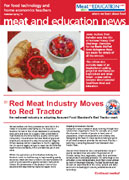
The latest education news letter was circulated recently to food technology and home economics teachers. Its contents include:
- the move to using the Red Tractor
- information on an inspirational cooking project in Northampton
- an innovative approach to motivating young people to become healther
- the latest digi bites resource – which is a series of video clips available for downloading
- the Meat Smart online resource – which is a whiteboard program on seasonal food
- how a chef was tasked with transforming a schools food and food skills
- the newsletter and more to be found at www.meatandeducation.com
World Cup – Score with BPEX
‘Score with Pork’ is the aptly named theme of a BPEX promotion, targeted at pubs and catering establishments screening World Cup matches this summer.
Free point of sale kits will be available in mid-May on a first come-first served basis, each containing a ‘sweepstake’ kit (a wall planner, poster and entry tickets), as well as recipe leaflets and serviettes.
The recipe leaflet features six ‘hand-held’ recipe ideas to tempt hungry fans, while alternative serving suggestions are also provided to offer appeal outside of the World Cup calendar.
Back to Top
Knowledge Transfer
Tip of the Week – Farrowing Rate Target
Keeping track of changes in performance over time means you learn what works for your unit and can help motivate you and your team; it also provides early warning if performance starts to deteriorate. For a ‘real-time’ farrowing rate (FR) record draw up a fertility chart and record weekly services, subsequent failures and expected FR. For guidance on how to achieve a FR of 88% see Action for Productivity 26 (Improving KPIs: Breeding herd).
Adding Value to Assurance
Recently completed research by the universities of Bristol and Newcastle and funded by BPEX was designed to examine the feasibility and benefits to the industry of including some on-farm observations of welfare outcomes within farm assurance scheme assessments. Five ‘core’ measures of welfare were identified by the project steering group for particular evaluation during the project:
• Tail lesions
• Body lesions
• Oral behaviour
• Lameness
• Pigs requiring hospitalisation
From the research, the steering group recommended that each of these core measures be included within UK pig farm assurance schemes and that they should be assessed by veterinary surgeons during the quarterly veterinary visit and by farm assurance assessors at the annual audit. Importantly, the steering group recommended that ‘punishments’, such as non-compliances, should not form part of the welfare outcome assurance process, but that positive rewards for farmers who had good levels of welfare outcome measures on their farms could be explored.
Further details about this and other research and development work can be found in the forthcoming BPEX Annual Technical Report.
Cross Compliance Farm Walk
Farm walks cover a range of cross compliance issues affecting arable and livestock farmers. This farm walk will include coverage of all GAECs and SMRs with emphasis on compliance failures, animal welfare, livestock ID and registration, SPR, NVZ and plant protection products. The event is taking place on Tuesday 15th June at Raincliffe Grange, Seamer, Scarborough and will run at 10:30am and again at 1:30pm.
To Book please call 0845-345-1302 or click here.
Don’t Miss the Environment Surgery
South Yorkshire Pig Business Club is holding an update on NPA activities and ‘Environment Surgery’ on 29 April at the Red Lion in Todwick.
Dr Zoë Davies, Regions Manager for the NPA, will have just returned from Brussels and will be updating the group on how the NPA is dealing with the current challenges to the pig industry.
In addition Nigel Penlington, Environment Projects Manager for BPEX will be on hand to help with any queries or issues you may have with IPPC, NVZs, renewable energies etc. The meeting will start at 19:30, for further information contact Angela Cliff: 07967 788484
Back to Top
National News:
Pig Farmers are Tops
A new survey reveals that one in four farmers has noticed increased interest from customers in his environmental performance over the past year.
Over half those surveyed recognise that addressing climate change offers potential business opportunities — a significant rise on last year — and the number of farmers producing their own energy has doubled.
Almost half are taking action to reduce greenhouse gas emissions from their land (48 percent), and one in three (31 percent) farmers are doing something to adapt to the impacts of climate change.
Pig farmers came out top in reducing greenhouse gas emissions, with 63 percent saying they were taking action.
A survey has been released by Farming Futures, an industry-led project that seeks to help farmers respond to climate change.
Other key findings from the survey are:
- 42 percent think that investments in climate change action will pay off within 10 years.
- 74 percent think that producers should work more closely with processors and retailers to combat climate change.
- 82 percent think that farmers should work together and share ideas more to combat climate change, which could include setting up buying/sharing cooperatives, or ‘knowledge’ cooperatives.
- 88 percent said that rising input prices were making them more efficient with their resources, an increase on last year.
- Farmers are increasingly interested in measuring their farm’s carbon footprint – 36 percent compared to 31 percent last year.
Back to Top
Barbie Gets the Chop
Pork chops are the fastest growing meat cut at the BBQ occasion (+38%) 2009 vs 2008. This is just one of the facts at your fingertips in the Market Intelligence section of the BPEX website. Click here for more.
NADIS Latest – Acidification of Diets
Organic acids have been widely incorporated into diets to help control Salmonella in the gut of the pig. Whilst results are not consistent, they can form a useful adjunct to a herd hygiene programme aimed at reducing the excretion and possible meat contamination at slaughter, with the potential human food born pathogen.
However, care should be exercised in some instances. Cartilage growth in young pigs has been adversely affected by physiological acidosis and can be helped practically by addition of alkalising agents such as sodium bicarbonate. It is possible that dietary acid inclusion can contribute to acidosis, which may have implications for cartilage growth and effectively lead to physical lameness, especially in young breeding stock.
Pig producers in North West England are enjoying valuable support from Livestock Northwest – the Northwest Regional Development Agency’s RDPE grant programme for livestock farmers – with immediate practical benefits on farm.
One pig producer in the region applied for funding to replace his old electronic sow feeders. The feeders were breaking down and causing fighting and lameness among the sows. The Livestock Northwest awarded a grant to install new individual sow feeders which have solved the problems with sow aggression. A different producer has put forward an application for funds to update their farrowing accommodation.
A further 12 producers benefited from a BPEX workshop on troubleshooting tail-biting and understanding enrichment last week, led by Knowledge Transfer Manager Angela Cliff. It is another example of the activity Livestock Northwest has funded to date, all of which are bringing tangible benefits to smaller, family-run pig businesses.
Each business is eligible to apply for up to £12,000 from the total pot and the maximum grant rate is 40%. There is just a nominal charge for an assessment on farm to check that an application fits the criteria.Click here to find out more about the type of items eligible for funding.
Back to Top
Latest BPHS Dates
Below are the latest BPHS assessment dates.
Abattoir |
Date |
Vion Malton |
Monday 26 April |
Tulip Westerleigh |
Monday 26 April |
Cranswick Hull |
Wednesday 28 April |
Tulip Spalding |
Wednesday 28 April |
F A Gill |
Wednesday 28 April |
Woodhead Bros Colne |
Wednesday 28 April |
Cheale |
Thursday 29 April |
Vion Wiveliscombe |
Thursday 29 April |
Tulip Ashton |
Friday 30 April |
Woodhead Bros Spalding |
Friday 30 April |
Cranswick Hull |
Thursday 6 May |
Tulip Spalding |
Thursday 6 May |
Assessment dates for January to June 2010 in all participating abattoirs have been published and are available on the BPEX website.
Back to Top
International News:
US Breeding Herd Falls
The latest count shows that the US breeding herd has fallen from 6.23 million head in December 2007 to 5.76 million head on 1 March 2010. That decline of 473,000 breeding animals amounts to 7.6 per cent. The question is whether the herd will continue to decline. The answer depends on what kind of decline you are considering – actual numbers or year-on-year, writes industry analyst, Dr Steve R. Meyer of Paragon Economics.
In actual numbers, he expects the breeding herd to stop falling pretty quickly. The previous ‘loss’ cycle in 2003-2004 ended with a profitable February 2005 but this one is different, he says. Sow numbers are down 7.6 per cent since December 2007 and down 3.9 per cent compared with March 2009. It will take a while to overcome those cuts even if numbers start to grow quickly.
Back to Top
40% Growth in Meat Market
Population growth and income growth will drive the world meat market to almost 40% growth in the next 10 to 20 years, concluded Dirk Jan Kennes of Rabobank at the opening ceremony of VIV Europe in Utrecht, the Netherlands.
Biggest growth as part of the diet is to be expected in poultry meat, the pork share stabilises and beef will decrease in daily meals.
China is the biggest pork consumer. The country produces about 50% of all pork in the world and represents 54% of the Chinese meat consumption.
An overall growth is to be expected since more and more people pass the income threshold of $2 per day, which is the income threshold for changing the vegetarian diet to include meat.
Back to Top
H1N1 in Korea
Two outbreaks of H1N1 influenza have been confirmed in the Republic of Korea. The outbreaks involve 36 cases among 3,800 pigs. Restrictions have been imposed and the outbreak is being followed up according to a report from the OIE.
Back to Top
German Quality Scheme Expands
Since its foundation nine years ago, the quality assurance scheme QS has become the
standard for quality assurance for meat and meat products in Germany according to a report in the BPEX Export Bulletin. 90% of all German produced pork
and poultry and 65% of beef are now QS certified. Over the last five years the number of
members to this scheme has more than doubled totaling 124.884 companies – 11.600 of which are foreign suppliers. QS is seen as a
reliable assurance for a controlled production chain for all areas.
To see the full Export Bulletin, click here.
Back to Top
International Prices
For the latest international prices, click here.
Back to Top
|