
 |
||||||||||||||||||||||||||||||||
 |
|
|
||||||||||||||||||||||||||||||
|
In this issue
Latest Feed Info 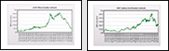
Nearby LIFFE wheat remained relatively static at £94/t over the week, to close at £95.75/t. Prices are being dominated by the continued weakening of the Euro against both Sterling and the Dollar. 
Latest Link Updates ZNCPig Scheme
Contact Details Call: 02476 692051 Email: [email protected] Web: www.bpex.org.uk Other BPEX Sites www.pigsareworthit.com |
BPEX Weekly: February 19, 2010 Marketing NewsQuality Bacon Rashers
Over 160 bacon rashers were tasted this week by our expert panel of bacon judges, who included two consumer media journalists, a chef, three LIPs ladies and our very own Master Butcher. The quality of the entries were extremely high which made the judging very tough. The presentation and variety of flavours were also impressive so whoever reaches the final rounds will be a worthy winner. The announcement of the finalists will be made on 22 March 2010 at the launch of Bacon Connoisseurs Week 2010. Click here to see the Bacon Flowchart – it’s incredimazing!
Best Ever Sausage WeekTNS data reported an 18% volume hike in sales of sausages during British Sausage Week, or 631 additional tonnes in real terms compared with the week before! The increase has largely been driven by an increase in both the number of TV pieces but more importantly the length of the pieces, with some being between 12-15 minutes long. Total media coverage for the week now amounts to a whopping £15.7m in total with £14.9m being generated directly by BPEX. This compares to £9m total coverage last year (£8.6m generated directly) and equates to a total return on investment of 150:1. It also appears to have been a massive success across both the school meals market and pub sector. All promotional materials produced were used, with early feedback indicating that sausage promotion during the week drove up sales of meals.
Pork For All SeasonsThe response to the publication ‘Pork the Meat for all Seasons’ has been huge. All caterers and catering butchers who have used it have said how good and useful it is. A number of chefs have commented that linking in seasonal vegetables with pork will encourage them to sell more pork based dishes. The book has been shortlisted for the Chartered Institute of Marketing’s annual awards in the Not for Profit Category. It’s available to download, by season, here.
National Butchers WeekNational Butchers Week, 15th to 20th March 2010, is organised by the Meat Trades Journal and supported by trade bodies (including BPEX) and suppliers to the industry. The week is organised to promote the service, quality products and knowledge of the local butcher to the general public. Knowledge TransferTip of the Week: Water MedicationIf you already administer medication to your pigs via water, or are considering it, it is crucial that you know how much water header tanks hold so that you get the dosing rates correct. Once you have identified the capacity of tanks, write it clearly on the side or document it on a plan alongside the number of pigs that the header tank supplies. This will make it easier for you to ensure dosing is accurate and give your vet confidence that you are water medicating accurately. A BPEX innovation fund project has recently investigated water medication: look out for the project summary over the next few weeks.
Ask BPEX: IPPC on Straw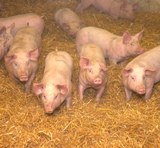
What is the cost of IPPC on a straw-based unit, and is it hard to do? IPPC in England is now covered by the Environmental Permitting Regulations (EPR). The Environment Agency (EA) website holds all of the relevant guidance, application forms and contacts: please click here to download. Regarding cost, farms are classed as Tier 2 Activities and the EA charging scheme can be found by clicking here. Currently the application charge stands at £3,614 and annual subsistence charge at £2,396. These will rise slightly on 1 April 2010. The actual cost of making an application will be higher depending on the amount of work required, how much you can do yourself and if you need to employ a specialist, for example to model ammonia dispersion. The application forms (you will need parts A, B & E) are on the EA website. There is a model template for a poultry form using these application forms and there are templates for the supporting documentation on the BPEX website. BPEX has been informed that a new farming specific application form is being developed, so depending if and when you apply there may be some changes. The EA offers all potential applicants 15 hours of free advice on areas such as identifying local habitat sites and possible initial screening of ammonia impacts. They will also help you identify what you need to submit with your application. To access this free advice you need to call the EA. Tel: 08708 506 506 (Mon-Fri, 8am – 6pm). For the hard of hearing a minicom service is also available by calling 08702 422 549. BPEX organises training and updates for pig producers with EPR permits from time to time. Please don’t hesitate to call if you would like to discuss in more detail: 0247 647 8797.
Events Near YouHave you been to a workshop or training session lately? Check out the BPEX events calendar on the homepage to see what is happening in your area. There is bound to be an event not too far away where you can catch up with other local producers over a bite to eat and pick up some ideas to help improve your farm’s productivity at the same time! Some of the upcoming events include: Oxford Training Club – Critical factors for success with AI (23/02/2010) Butcher Roadshow and Product Evaluation Event (West Midlands) (24/02/2010) Exeter Pig Club – Public and farmer perceptions of the concept of Pig Welfare (25/02/2010) Gilt selection and management – East Midlands (02/03/2010)
Young Producers DinnerHow long has it been since you looked round another UK pig unit? Join BPEX and the NPA for three virtual tours of pig units in the South West: Freedom Foods, outdoor and indoor. What do they look like, how do they run and what are the on farm strategies they are working on to improve? We would like to invite you to our third Young Pig Producers Dinner at 6pm on 30th March 2010, Jury Inn Hotel, Exeter, EX1 2DB – with some options for socialising in central Exeter after the event! The dinner will be fully sponsored by BPEX and NPA. To book a place call or text or call Helen Thoday on 07973 701202 or Oliver Bown on 07786 961574. There are some rooms reserved for anyone wanting to stay overnight – please let Helen know.
Back to the Future
Producers are flocking to register for ‘Back to the Future’, the second national BPEX Knowledge Transfer event. There are just weeks to go before the event on Wednesday 16th March 2010, to be held at the East of England Showground, Peterborough. To register for a ticket, contact Sue Wickham by e-mailing [email protected] or calling 02476 478793 before Friday 5th March. Speakers from both the northern and southern hemispheres will lead the discussion, helping pig producers take stock, look forward and focus on new opportunities for their business. Future gilt management, technologies, health and staffing will be tackled, along with the future of the pork product itself. The speaker line-up is: John Howard, Marketing Director of the Danish Bacon and Meat Council Paul Hughes, of the South Australian Research and Development Institute (SARDI) Richard Hooper, Farm Manager, Harper Adams University College Nigel Woolfenden BVSc MRCVS, Bishopton Vet Group Mark Hawe, AFBI, Northern Ireland and Andrew Macrea, Northern Irish pig farmer
BPHS DatesBelow are the latest BPHS assessment dates.
Assessment dates for January to June 2010 in all participating abattoirs have been published and are available on the BPEX website.
Northwest Livestock ProgrammeSupport is available for pig farmers in the north west. The Northwest Livestock Programme is working with livestock farmers across Lancashire, Cumbria and Cheshire to improve their business performance and sustainability by supporting group work. If you are part of an existing group of farmers, or looking for help establishing a new group, the programme can provide access to specialists and technical information on animal health and welfare and the more efficient use of energy resources, manures and fertilisers. The meetings are very much farmer-led which is why we will be asking you to tell us the type of meeting you would like to attend and covering topics that would be of benefit to your business and other pig farmers. Please contact Robert Burrow with your thoughts and suggestions for meetings on 01995 642206 or email [email protected]
Farm Business FundingThe Farm Resource Improvement Programme (FRIP) has been developed to help farm businesses in South East of England and London. FRIP is a sub-programme under RDPE which aims to simplify the application process and will provide grants up to £25,000 per farm business. Round One of FRIP – items which eligible for grant funding include:
The programme is available to all farmers across the region. The closing date for applications into Round One of FRIP is: 12th March 2010. For further information contact: Helen Dallas, RDPE Projects Coordinator on 01483 484297 or e-mail: [email protected].
National News:Last Call for BPEX SurveyThere is still time to take part in the annual BPEX survey looking at levels on confidence inside the industry.
ABN Innovation Award
ABN, partner of the Royal Agricultural Society of England’s British Pig & Poultry Fair, is offering £1000 in prize money to the winner of an exciting new industry competition, the ABN Innovation Award. The award will be presented on the second day of this year’s RASE/ABN British Pig & Poultry Fair on Wednesday May 12, at Stoneleigh Park, Warwickshire. “The award provides a new and unique opportunity for young people from both outside and within the industry to put forward an exciting and innovative marketing concept for British pig or poultry food products,” says ABN’s commercial services director Angela Booth. “It’s a great opportunity for the next generation to put forward their ideas and take part in this prestigious national award." Aimed at the under 35s, entrants are asked to submit an innovative and creative concept in any format receivable by post or e-mail by Friday April 9, 2010. Entries will be reviewed by the judging panel and successful finalists will be invited to attend the Fair in May to present their concept to a panel of judges. For more details of the award and an entry form please visit the website. Meat Not British StandardThe Guardian newspaper has highlighted that at least a quarter of meat sold in Britain is not produced to British animal welfare standards, as the meat is imported. Looking at the most recent complete trade figures available (for 2007) The Guardian reports:
Total imports of pork, poultry, beef and veal made up one third of all meat sales so it is likely that some of the remaining imports came from smaller trading countries also with lower standards, says The Guardian. Meat Versus VegThe Times published this letter this week in response to an earlier article: Sir, The impact of food consumption on the planet is a complicated area; one which cannot be oversimplified by polarising the debate to meat versus vegetable-based diets. Indeed, dedicated meat-eaters who got the impression that the recent report, completed by WWF and the Food Climate Research Network, gives the green light for eating more meat will be disappointed. To cut enough greenhouse gas emissions from the food chain — as part of our goal to limit climate change to within 2C — it is likely that there will have to be changes to our diets, as well as considerable advancements in technology and decarbonisation of the food chain. That’s what our report concluded. Such dietary changes don’t involve “no meat”, they involve less meat and dairy (the more progress we make in terms of green technology etc, the fewer changes there will need to be to our diets). There is no green light for the continued high levels of meat consumption, and there is equally no green light to encourage everyone to “go vegetarian” or “go vegan”. What there must be, however, is a green light for the development of a sustainable diet — one that is balanced for health and for environmental reasons. We are exploring what this diet might look like along with how to create it, while also supporting the farming industry. This could mean that we move towards eating fewer, but better, livestock products, alongside a wide range of plant-based foods — cereals, fruit and vegetables. This won’t be easy, and will be even less so if the debate continues to be oversimplified. Mark Driscoll Tara Garnett Green Light for Green Office
The Agriculture and Horticulture Development Board’s plan to build an extremely energy efficient office building on Stoneleigh Park in Warwickshire has been approved by Warwick District Council. The single storey 38,000 sq foot building is being designed and constructed to the highest standards, helped by £4.7million from regional development agency Advantage West Midlands towards AHDB’s relocation and restructuring costs. The building will meet the BREEAM standard of excellence for eco-friendly construction and provide space for up to 250 staff. AHDB Chairman John Bridge said: “This is excellent news. We need open plan offices to help us fully deliver the sharing of best practice and other operational efficiencies expected from the restructuring of the levy boards. “A real strength of the levy boards has always been in the expertise and quality of the staff. In my experience good working conditions helps to retain and motivate staff.
New AHDB Chief
Tom Taylor has been appointed as Chief Executive of the Agriculture and Horticulture Development Board (AHDB) and will start with the levy board early in the new financial year. Tom is currently the Chief Executive at The Shrewsbury and Telford Hospital NHS Trust. He is a qualified accountant and a Fellow of the Chartered Institute of Management and has a wealth of senior management and corporate governance experience across both public and private sectors. AHDB Chairman John Bridge said: “The Board and I are delighted we have someone of Tom’s calibre joining us. We’re coming out of a period of massive change as we build a new more efficient structure to address our levy-payers needs – his leadership skills and management experience will be critical in successfully completing this process.
International News:Swine Fever ResearchA £13 million UK-funded research programme has been launched to tackle damaging animal diseases such as foot-and-mouth and African swine fever in developing countries. British researchers said the projects aimed to help farmers and livestock owners in poor countries, whose animals acted as "walking bank accounts" and were crucial to their livelihoods. But the research, funded by the Department for International Development (DfID), the Biotechnology and Biological Sciences Research Council (BBSRC) and the Scottish Government, also provides "insurance" for the UK which can be affected by the same diseases. With global trade and climate change, diseases such as foot-and-mouth, African swine fever, bluetongue and African horse sickness are an increasing threat to UK livestock, the researchers said. International PricesFor the latest international prices click here.
|
|||||||||||||||||||||||||||||||
 |
||||||||||||||||||||||||||||||||
