
 |
||||||||||||||||||||||||||||||||||||||||||
 |
|
|
||||||||||||||||||||||||||||||||||||||||
|
In this issue
Latest Feed Info 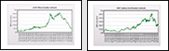
For the first time in over a month, UK LIFFE wheat prices are now at a premium to CBOT maize, the global feed grain benchmark price. The LIFFE prices being at a discount in recent weeks has led to UK exports being very competitive, For more feed information, click here. 
Latest Link Updates ZNCPig Scheme
Contact Details Call: 02476 692051 Email: [email protected] Web: www.bpex.org.uk Other BPEX Sites www.pigsareworthit.com |
BPEX Weekly: April 09, 2010 Improving Pig HealthThrough the Yorkshire and Humberside Health initiative pig producer Project vet from the Ripon-based Bishopton group, Nigel Woolfenden, will discuss the success of the project a year on at the Pig Health forum on both days of the British Pig and Poultry Fair, May 11-12. “The level of commitment from producers in the region has been astounding,” he says. “The initiative is all about communication and co-operation and I will demonstrate how this has been crucial in enabling the mapping out of units to happen and establishing the health status of each one.” Chairing the forum is Yorkshire and Nottinghamshire pig producer Richard Lister, who will discuss the biosecurity protocols the Yorkshire and Humberside Health initiative is putting in place. “We want to be confident that we have measures in place that will help prevent disease coming on to our units and also, in the unfortunate event of a disease breakdown, the systems are in place to stop it leaving the farm,” he said. “We are developing comprehensive protocols that should stand us in good stead should there be a disease threat in future and I will be sharing these ideas with visitors to the pig health forum.” Initiatives similar to that in Yorkshire and Humberside are being developed in other parts of the country so there will be a great deal of information in this forum to interest British pig producers. The forum takes place at 12.30pm on the first day – Tuesday May 11 – and 11am on Wednesday May 12, in the theatre area between Exhibition Halls 1 and 2. To see the Pig and Poultry Fair website, click here. Marketing NewsThe Heston Effect!The decision by Waitrose to feature Delia Smith and Heston Blumenthal has given sales a spectacular boost. According to The Grocer Heston’s roast dish inspired purchases of Waitrose Essential British Pork Loin Roast to jump by 4,000% – the same amount the retailers would normally sell in 33 weeks. Back to Top
|
|||||||||||||||||||||||||||||||||||||||||

 s in the region are making strides in implementing control measures for endemic disease.
  promote the fact that they are Assured Pig Farms. They are produced from durable outdoor material to ensure longevity in all weathers.


Abattoir |
Date |
Tulip Spalding |
Monday 12 April |
Cranswick Hull |
Monday 12 April |
F A Gill |
Tuesday 13 April |
Woodhead Brothers Colne |
Tuesday 13 April |
Tulip Ashton |
Wednesday 14 April |
Woodhead Brothers Spalding |
Wednesday 14 April |
Cheale |
Wednesday 14 April |
Vion Wiveliscombe |
Wednesday 14 April |
Cranswick Norfolk |
Thursday 15 April |
Vion Malton |
Thursday 15 April |
Tulip Westerleigh |
Thursday 15 April |
H G Blake |
Thursday 15 April |
G Wood & Sons Ltd |
Thursday 15 April |
Cranswick Hull |
Tuesday 20 April |
Tulip Spalding |
Tuesday 20 April |
Ensors |
Wednesday 21 April |
Tulip Ashton |
Thursday 22 April |
Woodhead Brothers Spalding |
Thursday 22 April |
Cranswick Norfolk |
Friday 23 April |
Assessment dates for January to June 2010 in all participating abattoirs have been published and are available on the BPEX website.
Back to Top
NADIS Latest – Preweaning Mortality
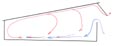
Current data from NADIS covering the last three years shows clearly that piglet mortality follows a seasonal pattern of increasing in the cold weather.
This pattern is common to both indoor and outdoor farrowings and in the latter case has shown a marked jump since the cold and wet weather, which set in late last year.
It is well recognised that the most important environmental factor affecting piglet survival is in chilling, both for its direct effects and for its effects on colostrum intake.
This data suggests that producers have not fully embraced the thermal requirements of the newborn piglet. Producers should review heat lamp manage-ment, creep construction, bedding, temperature control of heat pads in indoor farrowing units and overall arc and bedding management outdoors.
International News:
MRSA Research Project
A three-year project is being undertaken by the Veterinary and Agrochemical Research Centre (VARC) and the Free University Brussels (VUB) with the aim to eliminate methicillin-resistant Staphylococcus aureus (MRSA) from pigs.
According to VARC, MRSA are multi-drug resistant bacteria that cause severe problems in human medicine. A new reservoir of MRSA was discovered recently in pigs, but different domestic and non-domestic studies show that other species may be colonized as well.
The aim of this project is to eliminate MRSA in pigs, or at least achieve a significant reduction in the level of colonization, thus lowering or preventing the risk of human beings being infected. To achieve this, phage endolysins are over-produced in E. coli or Pichia pastoris. They are purified for use in the in vivo treatment of experimentally infected animals.
Back to Top
FMD in China?
Reports in Chinese local media outlets suggest that Foot and Mouth Disease (FMD) in China may be more severe and widespread than has been hitherto reported.
The website of the American Association of Swine Veterinarians (AASV) reports that local media reports suggest there have been Foot and Mouth outbreaks in Jilin, Heilongjiang, Liaoning and Inner Mongolia, although these have not been reported to the World Organisation for Animal Health (OIE).
The country reported three outbreaks to the OIE during 2010, a new outbreak of FMDV serotype A in dairy cattle in a village in Daxing district, Beijing.
Boar Taint Project
It is highly probable that apart from skatole, indole and androsthenone, there are other components for boar taint, Dutch agricultural newspaper Agrarisch Dagblad reports.
Researcher Coen van Wagenberg, Wageningen University and Research Centre (WUR), reported this. He is responsible for a research project related to the ceasing of castration.
He heated boar taint infected meat, caught its gases and separated them. A panel then sniffed the various components and this way it became possible to point out new components that also contribute to boar taint in pork.
Van Wagenberg also researched the system in which people actually determine boar taint at the slaughter line. This is a possibility in practice, Van Wagenberg said. He added that it is possible to schedule breaks as alertness may dwindle after a while. In addition, it may be possible that different people may judge differently.
The researchers also wish to investigate electronic boar taint detection and literature studies have been made. Van Wagenberg commented that a smell detector could be implemented, similar to those on airports for drugs detection.
Back to Top
Dutch Producers to Quit
Over the next few years, 30-35% of pig farms in the Netherlands are expected to go out of business, according to the Dutch agricultural newspaper Agrarisch Dagblad.
Several sources within the industry have reported this, when being involved in drawing up future-proof development plans for the industry.
Animal husbandry farms had to submit a development plan, before April 1. In these plans, the farms have to report how they plan to deal with legislation with regard to ammonia odours.
Advice bureau DLV-intensief is mainly focusing on the larger farms, but still Paul Bens, director, agreed around 30% will quit the pig business.
Back to Top
EU CAP Attitude Survey
The EU has published a survey of of people’s attitudes to the Common Agricultural Policy (CAP) , according to which European citizens broadly support the new aims of agricultural policy.
That means helping farmers to meet the challenges arising from climate change, becoming more market-orientated, allocating support more fairly and making it conditional on compliance with environmental standards, maintaining the countryside and to develop the rural economy. They are also in favour of maintaining its budget.
According to public opinion, the agricultural policy should focus on ensuring the quality and safety of agricultural products, provide a decent standard of living for farmers and ensure reasonable prices for consumers, protect the environment and rise to the challenges of climate change.
The support for agricultural policy is accompanied by a general preference for the policy to be conducted at European level. Whether it is the protection of the environment, rising to the challenges of climate change, security of supply, ensuring the quality and safety of food or providing a decent standard of living for farmers, citizens believe all these issues should be dealt with at European level.
To see the report, click here.
Back to Top
New EU Organic Logo
The new logo for organic products has been published by the European Commission in the Official Journal of the European Union.
It will become obligatory from 1 July 2010 and will appear on the market over a transition period of two years. It will be used inside and outside the EU borders on pre-packed organic products.
Real Meat Lovers
According to a research conducted by the pharmacy newspaper ‘Apotheken Umschau’, four out of ten Germans eat meat or sausages at least once a day. Every second man interviewed stated that a day without eating meat would be absolutely out of the question, according to the latest Export Bulletin. To read the full bulletin, click here.
Back to Top
International Prices
For the latest international prices, click here.
Back to Top
All’s Not Whale in Denmark
A slip of the pen can set up some interesting alarums. The Danes were accused of buying whale-meal from Iceland, to feed illegally to their pigs.
This sparked a full-scale investigation which has discovered that what the Danes actually imported was fish-meal. The Icelandic exporter had filled in the export declaration incorrectly.
(
Source: NPA website)
