
 |
||||||||||||||||||||||||||
 |
|
|
||||||||||||||||||||||||
|
In this issue
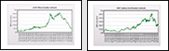
Thin trading during the first week of the new year gave little change in prices over the past week. UK nearby LIFFE wheat futures closed £0.2/t up over the week at £108/t. In the soyameal market, recent Chinese demand for soyabeans has helped to support prices. However in the last week CBOT nearby futures for soyameal weakened $10/t to close the week at $338/t. For more feed information, click here. 
Latest Link Updates ZNCPig Scheme
Contact Details Call: 02476 692051 Email: [email protected] Web: www.bpex.org.uk Other BPEX Sites www.pigsareworthit.com |
BPEX Weekly: January 08 2010 Look out for…Details and invitations for this year’s KT producer conference ‘Back to the Future’ will be coming soon. Save the date in your diary: 16th March 2010.
Marketing NewsLove Your Body with LovePork
|
|||||||||||||||||||||||||



Abattoir |
Date |
H G Blake |
Monday 11 January |
Ensors |
Monday 11 January |
G Wood and Sons |
Monday 11 January |
F A Gill |
Tuesday 12 January |
Woodheads Colne |
Tuesday 12 January |
Cranswick Hull |
Tuesday 12 January |
Tulip Spalding |
Tuesday 12 January |
Tulip Ashton |
Thursday 14 January |
Woodheads Spalding |
Thursday 14 January |
Cranswick Norfolk |
Monday 18 January |
Cheale |
Thursday 21 January |
Back to Top
Free Energy Audits
The Carbon Trust is offering free energy audits to businesses who can demonstrate a total energy spend of over £30,000pa. Farms audits are carried out by the Farm Energy Centre and were previously only available to businesses above a £50,000 threshold. Breeder Finishers with more than 600 sows might have consumption above £30,000pa. Anyone interested in applying should contact [email protected] or phone 07768 558093.
Back to Top
Bio-energy Grants Scheme
Application forms and guidance notes for Round 6 of the Bio-Energy Capital Grants Scheme are now available to download. The Scheme awards grants of up to 40% of the eligible capital costs of installing biomass heat and biomass Combined Heat and Power (CHP) equipment.
The Scheme will award grants from the end of January 2010 on a monthly basis until all of the funding is allocated. It is therefore important to submit your application within the next few months.
ToPlease visit to download the application form and guidance notes, click here. Please note that low quality or incomplete applications will be rejected immediately and will be asked to reapply to the Scheme.
For any queries, please contact the Scheme administrators at [email protected] who will be able to answer any of your questions relating to eligibility and the application process.
Back to Top
Key Performance Indicators
The latest Key Performance indicators from Agrosoft data have been uploaded to the BPEX website. Click here to see them.
Back to Top
What Next for Pig Industry?
Get up to speed with everything BPEX has to offer at a brand new series of free pig industry updates next week.
The three events aim to make sure pig industry organisations and their customers know what BPEX has in store over the next three years. Everyone working in the allied industry is welcome to attend. BPEX Head of Communications Andrew Knowles said: “This is an un-missable opportunity to find out about the range of services that BPEX provides the allied companies.
“We will discuss areas where BPEX can work with them to help close the physical performance gap between UK pig producers and our European competitors.”
There will also be the chance to meet the local BPEX team, find out what is happening in the region and learn more about the funding opportunities available to help support customers.
Those wanting to attend must register to secure a place at the event: call Tess Howe at BPEX on 07779 321078 or email: [email protected].
Dates:
12th January – Ramada Inn, Wetherby
13th January – Brome Grange, Nr Eye
14th January – Holiday Inn, Swindon
Agenda:
14:00 Working together – funding and opportunities available
14:40 Knowledge Transfer Team – what are we up to in your area?
15:20 BPEX Strategy – what does it mean to you?
16:00 Feedback/discussion
(Full details of the venue will be sent out on registration)
Back to Top
National News:
Benn on Food Security
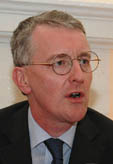
Ensuring food security is just as important to Britain’s future as energy supply, Secretary of State for Environment, Food and Rural Affairs Hilary Benn told delegates at the Oxford Farming Conference today as he unveiled the Government’s food strategy, Food 2030 .
Farming and food businesses contribute more than £80 billion to the economy and represent the UK’s largest manufacturing sector, employing 3.6 million people.
The Food Strategy sets out the challenges facing Britain in maintaining a secure food supply at a time of rapid population growth and climate change, and following the big price increases seen in 2008 following droughts and the rise in the price of oil.
Mr Benn said: “Food security is as important to this country’s future wellbeing – and the world’s – as energy security. We need to produce more food. We need to do it sustainably. And we need to make sure that what we eat safeguards our health.
“We know that the consequences of the way we produce and consume our food are unsustainable to our planet and to ourselves. There are challenges for everyone involved in the food system, from production right through to managing food waste.
“We know we are at one of those moments in our history where the future of our economy, our environment, and our society will be shaped by the choices we make now.”
The Government’s food strategy, Food 2030, can be found by clicking here.
Back to Top
TVC Buys Marketing Group
Thames Valley Cambac has bought Allied Livestock Marketing. The deal will be complete at midnight Friday January 22.
Allied Livestock Marketing is a division of Associated British Nutrition (ABN), which is a subsidiary of Associated British Foods. It is a pig marketing operation based in East Yorkshire. Its traders will transfer with the acquisition.
ABN has sold its marketing business to Thames Valley Cambac because it believes marketing companies need greater scale these days.
Back to Top
Latest Cost of Production
The latest monthly updates on cost of production figures for the pig industry are now available on the BPEX website. Click here for more.
Back to Top
Pig Industry Confidence Survey

As one of the worst recessions in living memory appears to be easing, is the pig industry in the mood for investment and expansion?
Gauging the ‘state of the nation’ isn’t easy but over the last few years BPEX has developed an annual survey which goes a long way to answering those questions.
The annual confidence survey is now in its fourth year which means there is now enough information to start looking at trends.
BPEX Head of Communication Andrew Knowles said: "It is vitally important that we know the mood of the industry and the individual sectors within it.
"The survey covers producers, allied industry, civil servants and retailers to give us as wide a view as possible.
"It is also a good opportunity to measure the services BPEX has to offer – which are most used and how often."
The survey itself will be going out next week (Jan 13) and it will help make it even more useful if all those who receive it complete and return it.
Anybody who doesn’t receive the survey but would like to take part can do so by clicking here.
Back to Top
Energy-saving Loans
Farmers will get financial help to invest in energy-saving equipment and slash their energy bills by a total of £4 million, and 25,000 tonnes of CO2 annually, using interest-free loans from the Carbon Trust, Environment Secretary Hilary Benn announced today.
From 1 February 2010, British farmers will be eligible for unsecured, interest-free loans for between £3,000 and £20,000 to help them upgrade to more energy-efficient equipment. The loans are designed to pay for themselves through direct energy savings provided over one to four years – and after the loan is repaid, farmers will make direct savings on their energy costs, as well as cutting the carbon footprint of what they produce.
The loans scheme is part of the Carbon Trust’s Big Business Refit – a nationwide campaign encouraging British businesses to replace old, energy intensive equipment which wastes £3.3 billion a year. The money has been made available from a £100 million Carbon Trust fund ring-fenced by the Treasury from 1 April 2009 until the end of March 2011. The loans will be available on a first come, first served basis.
Back to Top
International News:
Pigs Help Fight the Flab
Pigs are being fed bread at Aarhus University, Denmark, to serve as models for humans in the development of healthy foods.
Together with rats and humans, the pigs serve in trials to shed more light on the effect of low-fibre and high-calorie foods on the human health. Key to these trials is to find out whether new, healthy foods that do not compromise people’s liking for modern food can be developed.
The typical Western diet with lots of fat, sugar and starch but low in fibre may lead to problems with overweight, obesity and type II diabetes. Hence, scientists try to investigate if they can change the carbohydrate composition of foods to make them healthier.
Back to Top
Break-even for US Producers
U.S. pig producers should break even in 2010 as both the average price received and the total cost of production are expected around $50 per hundredweight, according to Purdue University Extension Economist Chris Hurt.
In a report, Hurt forecast first quarter live hog prices "in the higher $40s per hundredweight" followed by "the low $50s" in the second quarter, "nearly $50" in the third quarter and "in the mid-to-higher $40s" in the fourth quarter.
Back to Top
German Production to Grow
Total German pig production will grow in 2010 by 3% to 57.8 million head says the German organisation for agricultural and retail companies Deutsche Raiffeisenverband (DRV).
DRV expects that imports of piglets and finishers can grow by 9% to a number of 1.3 million animals; live pig exports are expected to decrease slightly.
In 2009, a total of 56 million pigs were slaughtered in Germany, which equalled a 2% revenue growth for the meat production and manufacturing industry. Pork supplies increased by 2.5% to 5.25 million tonnes. Taking into account a decrease of domestic demand of approximately 1.6%, the self sufficiency rate for 2009 came down to 108%.
DRV added that the German livestock and meat industry managed to maintain production figures of 2008 throughout 2009. Total revenue is estimated to be approximately €4.8 billion.
Back to Top
Danes Under Stress
The latest Export Report looks at work done by a doctor looking at Danish slaughterhouse workers. It says they have hard physical work at fast assembly lines and a job that might be relocated abroad. This puts such pressure on them they have the highest illness absence of all industries in the private sector says Dr Soren Dahl, a specialist in occupational diseases. Dr Dahl found slaughterhouse workers were badly affected by attrition compared to other sectors. There are far too many people who have pains in arms, hands, necks and backs due to exhausting work. To read the Export Report, click here.
Back to Top
International Prices
For the latest international prices, click here.
