
BPEX Weekly

In this issue


Latest Feed Info

feed info

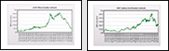
The latest USDA estimates saw ‘09/10 world wheat closing stocks increased by 4.7Mt on December’s estimates to 195.6Mt after Russian production was increased 2.2Mt.
However, US winter wheat plantings for 2010/11 (harvest 2010) are seen at 15 Mha, their lowest level since 1913 and down 14% on 2009/10.
The already record US and Brazilian soyabean crop estimates were further increased by the USDA last week. The US crop is seen up by more than 1Mt to a new record of 91.47Mt and Brazil’s crop was adjusted up by 2Mt to 65Mt to take account of a larger planted area and favourable growing conditions. World soyabean production for 2009/10 is now seen at 253.4Mt, 42.5Mt higher than last year’s output with closing stocks for the year also increased by nearly 2Mt to 59.8Mt the highest stocks seen since 2006/07.

For more feed info, click here

events

Latest Link Updates

Pig Market Update

Feed Market Update

ZNCPig Scheme


unsubscribe


Contact Details

Call: 02476 692051

Email: [email protected]

Web: www.bpex.org.uk


Other BPEX Sites

www.pigsareworthit.com
www.meatmatters.com
www.porkforcaterers.com
www.porkforbutchers.co.uk
www.lovepork.co.uk


BPEX Weekly: January 22 2010

Marketing News

Product Evaluation

Buthcers event

The 4th of this seasons 2009-2010 Butchers Product Evaluation events is at Newark Showground on January 27 and starts at 2pm as butchers arrive with their products for judging.  The 12 exhibitors who tour with us will be in attendance to showcase their range of products as the judging proceeds during the afternoon.  At 6pm as the results are being prepared a pork supper is served for all attendees as the anticipation rises for 7pm when the presentations begin.  If you have award winning products such as bacon, sausages, ready meals, black pudding or meat balls and wish to enter, it’s still not too late, go to click here and download an entry form now.

Back to Top


Pork Consumption Reviewpork review

Pork cuts consumption is showing slight growth of +1% Vs 08, driven by growth at the evening meal.

Bacon is declining at breakfast but has experienced growth at the evening meal.

Ham is growing at the in home lunch and in the lunchbox driven by sandwiches.

Sausages are growing at their core occasions breakfast and consumption is stable at evening meal.

Core Pork consumers, the over 45s, are eating less pork this year whilst younger consumers have increased their pork intake.

For the full report, click here.

Back to Top


Rate My Sausage

This is an interesting website which compares a range of different sausages and still still expanding. Worth a quick look. Click here for more.

Back to Top


Knowledge Transfer

Tip of the Week: Get a Good Start

Reduced feed intake is the main cause of post weaning growth check. Any practical approach to keep weaners eating and growing will deliver performance and financial benefits through to slaughter.

One approach, if managed successfully, is creep feeding during the nursing stage. Piglets that obtain extra nutrients on top of sow milk will be best placed to adapt to the sudden transition to dry feed; and remember, creep feeding is more successful the more time and effort is devoted to it.

Back to Top


Environment HubEnv hub

Have you visited the one-stop shop for all things environmental recently? We have been adding new content, particularly relating to renewable energy, so it’s definitely worth a look: www.bpexenv.co.uk

Back to Top


PhD Studentships

Applications are being sought for the pig sector PhD studentship programme for projects starting in October 2010. The invitation is issued on behalf of the joint levy body BPEX, who provide the funding for the awards. The deadline for submission is 5 February 2010 and we hope to be able to inform all applicants of the results of the selection process by the end of April. 

For details of the research priorities and how to apply click here.

Please contact Mike Varley ([email protected] or 0247 647 8801) if you need any further information.

Back to Top


Effective Salmonella Control

A survey has shown many farm plans for controlling Salmonella are unlikely to be effective. The producers concerned will be asked to improve their plans and re-submit them. Meanwhile a self-assessment farm hygiene test is being developed and will soon be available, and producers will be able to use this to score their level of risk and highlight what controls need to be put in place achieve improvements.

Although many of the farm plans surveyed were good and focused specifically on controlling Salmonel­la risk on the farm, 43 percent did not include enough effective action towards Salmonella control.

Professor Mead said: "Producers should work closely with their veterinarian to put together an effective control plan. The plan should detail the specific risks found on their own farm and show what action is planned to control those risks in the future.

"A few of the plans I reviewed gave only a simple check-list of best practices. The plans should not be viewed like an exam, and if they only repeat general best practice advice, they are unlikely to have any major impact on the producer’s farm."

For more information on the Zoonosis National Control Plan, producers should visit the website at: www.bpex-zncp.org.uk. Zoonosis National Control Plan advice sheets can be downloaded from: www.bpex-zncp.org.uk/zncp/about/library.aspx and Food Standards Agency ‘Serious about Salmonella’ booklets are available by emailing [email protected].

Back to Top


Back to the Future

‘Back to the future’ is the theme for the second national BPEX Knowledge Transfer producer conference. Invitations will be on producers’ doorsteps next week with details of how to register for the free event, which is open to all. It will be held at the East of England Showground, Peterborough, on Wednesday 16th March 2010.

Speakers from both the northern and southern hemispheres will lead the discussion, helping pig businesses focus on the current challenges and grab the opportunities. 

Future gilt management, technologies, health and staffing will be tackled, along with the future of the pork product itself. The speaker line-up:

John Howard, Marketing director of the Danish Bacon and Meat Council

Paul Hughes, of the South Australian Research and Development Institute (SARDI)

Richard Hooper, Farm Manager, Harper Adams University College

Nigel Woolfenden BVSc MRCVS, Bishopton Vet Group 

Mark Hawe, AFBI, Northern Ireland and Andrew Macrea, Northern Irish pig farmer

Back to Top


No Relief from Castration

A survey in European countries has revealed that 20 per cent of boars are left entire. Of the rest, fewer than three per cent are anaesthetised before castration.

A group of seven researchers from across Europe have published the results of their survey into the practice of castration in Europe in the journal, Animal, following presentation of their work at the EAAP Annual Meeting in 2008.
In the paper, lead author, B. Fredericksen from Animalia, the Norwegian Meat and Poultry Research Centre in Oslo and co-authors explain that PIGCAS (Attitudes, practices and state of the art regarding piglet castration in Europe) is to their knowledge the first project that has focused on castration practice across European countries.
The study identified large variations in castration procedures, both within and between countries. Reference: Fredriksen B., M. Font i Furnolsa, K. Lundström, W. Migdal, A. Prunier, F.A.M. Tuyttens and M. Bonneau. 2009. Practice on castration of piglets in Europe. Animal, 3: 1480-1487

Back to Top


Farm Case Studies

We all like to see how other people do things and sometimes you can pick up some useful ideas that you can introduce on your unit to improve productivity, save money or boost staff morale. When one of the BPEX team comes across an activity or idea that is a bit novel, simple to implement, and effective, we like to tell others about it in our short farm case studies. Click here for a whole range of case studies online. Look out for them every other month in Pig World too. 

Topics so far include fox fencing, kennel conversions, Nooyen farrowing crates and iron filtration. What are you waiting for? Have a look now!

Back to Top


National News:

Attraction of Imported Pig Meat

The fall of the euro against sterling threatens to take the shine off a promising year for British pig producers. It is making imported pigmeat more attractive to processors and retailers.

This highlights the importance of persuading retailers to commit to British Quality, as the Co-op has done this week by promising all its Somerfield stores will convert to 100 percent British fresh pork.

"This could be as important as the ‘Morrison’s Penny’," said NPA chairman Stewart Houston.

The latest Traffic Lights text notes that a weaker euro makes cheaper imports more of a threat, but says British numbers are still tight so today’s spot base price is a firm 142p, more in places.

Back to Top


Well Done Somerfield!

The Co-op, which sells only British bacon, sausages and fresh pork, has promised that from the end of this month its partner retailer Somerfield will do likewise. Tesco will be promoting British pork shoulder joints until February 7, dropping the price from £4.50 a kilo to £2.50.

Back to Top


Latest BPHS Dates

Below are the latest BPHS assessment dates

Abattoir

Date

Vion malton

Tuesday 26 January

Tulip Westerleigh

Tuesday 26 January

Cranswick Norfolk

Tuesday 26 January

F A Gill

Wednesday 27 January

Woodhead Bros Colne

Wednesday 27 January

Tulip Spalding

Wednesday 27 January

Cranswick Hull

Wednesday 27 January

Vion Wiveliscombe

Wednesday 27 January

Woodhead Bros Spalding

Thursday 28 January

Tulip Westerleigh

Tuesday 2 February

H G Blake

Tuesday 2 February

Ensors

Tuesday 2 February

G Wood and Sons td

Tuesday 2 February

Ensors

Friday 5 February

Assessment dates for January to June 2010 in all participating abattoirs have been published and are available on the BPEX website

Back to Top


No Porkies in The Sun!

The Sun has picked up on the research BPEX is doing on using isotopes to determine the origin on meat. The story, carried today, reads:

Non-Brit meat test

Shops selling cheap foreign meat as British will be exposed by a new hi-tech test.

Ready meals made with meat from as far away as Thailand can be labelled ‘British’ if processed or packed here.

The British Pig Executive test analyses the atomic profile of water the animal drank, which differs from country to country.

They hope to launch the test in the summer.

Back to Top


Developing Managers

The work has begun for the 11 pig managers on the first BPEX Professional Managers Development scheme. The group met this week for its first training session in Peterborough – two days and two nights to get to know each other, find out about different pig businesses and pick up skills in team building, problem solving and managing a workload. This session, supported by the NPA and BPEX, kicked off the exciting 18-month course which is a key part of the plan to build a skilled, professional and sustainable pig industry for the future. 

Course leader Alistair Gibb of Cedar Associates was really pleased with how it went: “The group worked together really well on a challenging range of activities. They have had very active discussions, sharing views and information on many different aspects of pig unit management.”

On successful completion of the course, managers will gain a nationally recognised qualification from the Institute of Leadership and Management.  A total of 24 applications were received for this pilot scheme, which is expected to become a regular fixture and aims to improve the recruitment and retention of high quality staff within the industry.

Back to Top


International News:

Tail Biting Study

When piglets carry their tails between their legs, they often become the victims of tailbiting, Dutch research has revealed. Hence, pig farmers can take preventative action.

The study by Johan Zonderland, Wageningen University and Research Centre, the Netherlands covered nearly 1,000 weaner pigs – of four to 10 weeks old. Pig tails had not been docked and he recorded their positions.

Zonderland noticed that the tails were curled, pointed straight backwards, were wagging or were stuck between the hind legs.

He said: "In our previous study we had already noticed that pigs with curly tails virtually never had any damage. But there was always something with pigs with their tails between their legs."

A quarter of the pigs seen to have their tails between their legs in two observations had serious wounds three days later. Bite marks from other pigs were found on 32% of these pigs.

Pig farmers can take measures to prevent an outbreak of tailbiting. Even throwing handfuls of straw or a toy into the group of pigs twice a day can make a big difference, another of his studies showed.

"It is much more difficult to stop the tail biting once the tails are wounded and there is blood on them."

This all works on the condition that the pig farmer should walk attentively through pig sheds at regular intervals, surveying the pigs’ behaviour and their tail positions. He admitted that this may not be easy in case 3,000 pigs or more are present on-farm.

There is, however, no alternative as no generally applicable cause of tail biting has yet been found.

Back to Top


EU Prices Low

For the six countries with most pigs in the EU, 2009 has not been a very good year as pig prices were clearly lower than the year before that. In comparison to 2008 pig prices were 4 to 11% lower, the annual price comparison of the German pig organisation ISN showed.

For these countries, Spain, Germany, Poland, the Netherlands, France and Denmark, this equals €0.06 to more than €0.16/kg slaughterweight less. In total, these countries keep 68% of all pigs in Europe in 2009.

The figures are based upon price data, collected by ISN throughout the year from thirteen EU member states. The prices are corrected to a price for 1 kg slaughterweight per standard pig.

The highest price in 2009 fell in summer as at that time, the average price was €1.36/kg slaughterweight – a year-on-year 10% difference as in 2008 the maximum was €1.47. Lower feed costs may have put less strain on pig producers, but these did not compensate for lower prices paid for pigs, the ISN writes on its website.

Back to Top


Export Latest

Over just a few years salmonella has spread strongly among Danish pig stocks and it is far more frequent than in the EU as an average according to the Food Institute of the Danish Technical University, reported in the latest Export Bulletin. A study by the European Food Safety Authority (EFSA), which the Food Institute assisted in preparing showed that now the disease-causing bacteria can be found in 41 percent of the Danish pig stocks. Click here for the full Export Report.

Back to Top


International Prices

For the latest international prices, click here.



Back to Top


BPEX, Winterhill House, Snowdon Drive, Milton Keynes, MK6 1AX