Look Out For:
Wall Planner
The BPEX 2010 wall planner. This large wall planner will include monthly reminders, contact details of the knowledge transfer team and a due to farrow calendar, as well as important dates for your diary next year.
Gammon on the Radio
Anthea Turner who will be helping to promote Gammon on regional radio on November 25.
New Factsheets
Four new factsheets due soon will help producers make decisions on renewable energy. The BPEX factsheets will help pig producers take advantage of a win-win situation, with new proposals set to increase the return on investment in renewable energy technologies.
Marketing News
Glorious Gammon Campaign
To promote the use of Quality Standard Mark Gammon over the Christmas period half a dozen new gloriously tasty recipes have been produced in a recipe booklet, plus a stunning new poster.
To download the booklet click here.
To get stocks for your shop you can order online by clicking here
The Grocer (21 November issue) has a special feature on Bacon, and a No More Porkies advert will be included within the feature.
Back to Top
Harrogate Butcher Triumphs
55 Butchers entered 210 products in the Regional Roadshow and Prod uct Evaluation event held at the Harrogate Showground this week. More than 70 products achieved gold awards and the overall winner with a Pork, Apple & Black Pudding was Kendalls Farm Butchers, from Pateley Bridge. They also walked away with three other category champion awards which included a Steak Pie, Meatballs and a Pork fillet ready meal. For more info go to www.porkforbutchers.co.uk uct Evaluation event held at the Harrogate Showground this week. More than 70 products achieved gold awards and the overall winner with a Pork, Apple & Black Pudding was Kendalls Farm Butchers, from Pateley Bridge. They also walked away with three other category champion awards which included a Steak Pie, Meatballs and a Pork fillet ready meal. For more info go to www.porkforbutchers.co.uk
Back to Top
Last Call for Competition

The first three counties Sausage & Pie championship is to be held at the Swan in Streatly, Berks. They are offering Berkshire, Oxfordshire, and now Hampshire butchers the chance to enter their competition, on Weds 18th November.
Click here for more details
Back to Top
English Winter Fair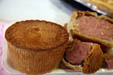
Held at the Bingley Hall, County Showground, Weston Road, Stafford, ST18 0BD
BPEX is sponsoring the Products Competition at this year’s English Winter Fair. For further info click here.
Or if you wish to enter your products click here.
Back to Top
Knowledge Transfer
Tip of the Week – Payment Reminder
You must go over your Soil Protection Review and make any amendments in light of any observations made during the year. The changes need to be made by December 2009 on the supplementary blue sheet sent out from the RPA with your Cross Compliance information. And remember to sign it – if you don’t there is an automatic 3% penalty!
Back to Top
BPEX Workshops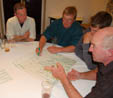
It’s a busy time for the BPEX Knowledge Transfer team with workshops taking place around the country.
Don’t miss out on the opportunity to meet other producers, discuss topical issues, get advice and grab a bite to eat! Check what events are taking place in your area by visiting the calendar of events on the right hand side of the BPEX website.
Alternatively, contact your regional manager or email [email protected].
Back to Top
Double Cost Concern
There are not just one but two major issues for abattoirs that could bounce back and hit producers. One is pleurisy and the other is poor slapmarking.
Pleurisy
Research at Cambridge Veterinary School has found pleurisy costs producers up to £2.26 per pig due to reduced carcase weight and increased age at slaughter. This figure is based on an average pig within a batch that has a pleurisy prevalence of 10% and, bearing in mind that some batches can have prevalence greater than 10%, the costs can be even greater.
Pleurisy is a very painful condition. The pleura, the lining between the lung and the chest wall, becomes inflamed and sticks to the carcase wall. This means further costs are incurred at the processing stage as the abattoir has to carry out extra trimming.
According to the research, pleurisy costs 29 pence per pig due to reduced line speed and increased disposal charges. Ultimately it is the pig producer who has to foot the bill for this.
Click here for more information on some of the risk factors and ways to reduce incidence of pleurisy.
Slapmarking
Poorly slapmarked pigs are also straining processor resources. It is the pig keeper’s responsibility to ensure that every pig sent for slaughter has been clearly slap-marked with the DEFRA herd number. The mark must be legible before and after slaughter, to allow clear identification of pigs and carcases and provide traceability.
For practical advice on slapmarking, click here to download BPEX’s ‘Work Instruction 2: Slapmarking slaughter pigs’.
To start reducing losses from both pleurisy and slapmarking issues, producers should sign up now to the BPEX Pig Health Scheme (BPHS) for more information and advice.
Back to Top
Are You Registered?
Every pig producer must register with DEFRA as a user of feed under the Food Hygiene Regulations. Make sure your records are up-to-date to comply with the assurance schemes.
Many producers find they are non-compliant when they have their annual inspection. But registration does not take long – it is handled by your Local Authority.
If you mix your own feed and include additives you should already be registered. If you use bought-in compound feeds, and have not already done so, you will need to send a statement of compliance to your Local Authority. Full guidance and a template form is available at www.assuredpigs.co.uk
Back to Top
Monitor and Negotiate
Electricity costs money, so can you afford not to know how much you are using? Some producers in the East of England have come together as a group, enabling them to negotiate with their supplier to get Smart Meters or automatic meter readers installed on their units.
The farmers can log on to view consumption/usage by the day, which is of value in itself, but as a group they are able to negotiate better with electricity companies by showing what the group’s usage and pattern of requirements is.
As of 6th April this year any new building installation must by law have electricity meters fitted, but only for large commercial or larger farms. Within 10 years electricity meters will need to be fitted at the private dwelling point.
Back to Top
National News:
Collaboration is the Key

Producer clusters in Yorkshire and Humberside met last week at Askham Bryan college to discuss recent progress and ideas for future collaboration in the region’s pig heath initiative.
Three cluster leaders – Keith Huddlestone, Phil Stephenson and Rob Beckett – shared details of their local clusters’ activity so far. This includes determining the locations of other units in their area, sharing contact details and establishing which are breeding herds and which have finishers only. The aim is to communicate more, share health information and discuss issues such as where stock is purchased from.
The need for the whole supply chain to work together as YHH heads into its second phase was also brought into focus. Ian Thompson explained how Easey manages its biosecurity. In particular, the firm works closely with hauliers to ensure wagon drivers are provided with wellies and overalls when they arrive on farm and that wagons are disinfected to help prevent disease transmission.
And Mark Wilson of Vion emphasised that producers and processors must work together to minimise health problems such as pleurisy, which slow down the line at the abattoir and incur extra processing costs.
Back to Top
Exports Booming
British bacon, sausage and ham exports are hitting new heights with the Republic of Ireland remaining the largest market.
Bacon exports have more than tripled since January of last year. For the whole of 2008, they reached 31,000 tonnes, worth £72 m. and are expected to remain at the same level in 2009. Shipments to Spain rose from 482 to 5,432 tonnes.
Exports of sausages have progressed substantially to 6,350 tonnes worth £14m. in 2008 and are expected to reach 7,500 tonnes this year.
The main destinations are Ireland (37%) and Spain (29%). Germany, Malta, Denmark, Greece, Malta and Portugal are also substantial markets.
With regards to ham, our exports were up to 16,000 tonnes worth £43m. in 2008 from 9,000 tonnes in 2006 and 12,000 tonnes in 2007 and are expected to rise by a further 15% in 2009. Some 860 tonnes of ham were exported to Hong Kong in 2008.
BPEX Export Manager Jean-Pierre Garnier said: “These figures are very good and in a competitive market place show exporters are taking advantage of high quality, high welfare pork and pork products which are an attractive proposition overseas.
“The marketing investment that this industry has afforded in many markets is showing dividends.
“With more pork likely to be produced in 2010, we can expect this progress to continue.”
Back to Top
ASDA Sold for £6.9bn
While the headline may seem surprising there is more to this particular £6.9 billion deal than meets the eye. The deal is in fact part of a larger restructuring at US parent Wal-Mart which has in effect sold Asda to a company called Corinth Services Ltd for only £200 million more than its original purchase price back in 1999.
The new owner of Asda is actually part of the Wal-Mart group of companies and many believe this particular deal has its basis in UK tax law and is tax efficient with regards to Wal-Mart’s UK investments. Corinth Services Ltd only has seven employees who are all directors of Asda.
Back to Top
DAPP Sample Enlarged
The Deadweight Average Pig Price (DAPP) sample is now taking in more of the industry following the decision of FA Gill to join.
FA Gill is included in the DAPP from this week and the move lifts the number of pigs in the sample of the weekly kill by more than 5%.
BPEX Director Mick Sloyan said: “We are looking forward to working with FA Gill and are very pleased they have decided to join the DAPP.”
Notes to Editors:
The DAPP is calculated from the weekly prices paid by participating abattoirs.
FA Gill is an integrated pigmeat processor from farm gate to dinner plate with its headquarters in Wolverhampton.
Back to Top
No Change to DAPP
Following discussions by the BPEX board, it has been decided the Deadweight Average Pig Price (DAPP) is to continue in its current form.
Consideration had been given to providing an analysis of the DAPP sample into formula and weekly-priced pigs.
However, the board concluded this would not provide a significant benefit to any part of the pig meat supply chain.
The DAPP provides a historical average price, weight and probe of pigs from participating abattoirs.
The DAPP currently represents more than 50% of weekly pig slaughterings in Great Britain.
FA Gills of Wolverhampton has now joined the DAPP and any other abattoirs wishing to take part should get in touch with Jonathan Eckley, contact details below.
BPEX Director Mick Sloyan said: “We are firmly of the opinion that DAPP is solely to provide a historical benchmark of prices paid and is not designed to be used for price setting.”
The DAPP is published every Wednesday at 2pm on the BPEX website. It is also available by text and fax. Anybody who would like to receive it should contact Jonathan Eckley on 02476 478845, [email protected].
Back to Top
BPHS Dates
The BPHS dates for the week commencing November 23 are:
Abattoir |
Assessment date |
Bowes |
Monday 23 November |
Tulip Ashton |
Monday 23 November |
Vion Malton |
Tuesday 24 November |
Tulip Westerleigh |
Tuesday 24 November |
Woodhead Spalding |
Tuesday 24 November |
Ensors |
Wednesday 25 November |
Cranswick |
Thursday 26 November |
Tulip Spalding |
Thursday 26 November |
HG Blake |
Thursday 26 November |
Woodhead Bros, Colne |
Thursday 26 November |
F A Gill |
Friday 27 November |
G Wood & Sons Ltd |
Friday 27 November |
Cheale |
Monday 30 November |
Vion Wiveliscombe |
Monday 30 November |
Back to Top
International News:
Bankruptcy Protection
One of the largest pork producers in the US has filed for Chapter 11 bankruptcy protection and will probably have to liquidate its 30,000-sow operation in the latest indication the US hog industry is still struggling to shrink to a profitable size.
Coharie Hog Farm, in North Carolina, was ranked as the 22nd largest pork producer in the country by Successful Farming magazine.
Back to Top
Market Aid
USDA has announced it will buy $50 million of pork products for federal food nutrition assistance programs.
The action is part of an $82.6 million purchase. USDA said the pork purchase would help farmers greatly reduce their sow herd in a market where production costs continue to exceed market value.
Back to Top
Export Latest
The number of co-operative owners of Danish Crown has fallen. Over the past year the number fell by a little
more than 1,500. During 2009, just 10,685 farmers delivered animals to Danish Crown compared to
12,152 in 2008. According to chairman, Niels Mikkelsen. (Source, Landbrugsavisen)
To see the whole report, click here.
Back to Top
|