
 |
||||||||||||||||||||||||||||||||||||||||||||||||||
 |
|
|
||||||||||||||||||||||||||||||||||||||||||||||||
|
In this issue
Latest Feed Info 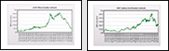
Over the past week UK LIFFE prices have followed global markets higher with the nearby May contract up £0.5/t at £98.10. New-crop prices also saw gains with Nov-10 prices also up £0.5/t at £103.7 In the soyameal market, CBOT soyabeans gained over the week, spurred on by strong demand from China. However, due to the bearish USDA putting soyameal production and ending stocks higher globally for 2009/10, CBOT soyameal prices remained steady, falling slightly over the week. For more feed information, click here. 
Latest Link Updates ZNCPig Scheme
Contact Details Call: 02476 692051 Email: [email protected] Web: www.bpex.org.uk Other BPEX Sites www.pigsareworthit.com |
BPEX Weekly: 16 April, 2010 Campaign Launch at Pig FairBPEX will launch its biggest project yet at the British Pig and Poultry Fair 11-12 May 2010. The Two Tonne Sow (2TS) project aims to help the English pig industry achieve an average of 2,000kgs of pig meat per sow per year. Despite improvements in physical performance in recent years, there remains a significant productivity gap between the English pig industry and its major European competitors: Kg carcase weight per sow per year 2008
(Source: BPEX 2008 Pig Cost of Production in Selected Countries) Closing this physical performance gap is crucial to the long term competitiveness of the English pig sector. We need to ensure we are in a strong position to sustain profitability during periods when the market place and exchange rates are less favourable. Marketing NewsMarketing Activity
Download the 2010-2011 campaign activity schedule to see details of forthcoming campaigns and activities across all sectors of marketing. Click here for more.
|
|||||||||||||||||||||||||||||||||||||||||||||||||



Abattoir |
Date |
Cranswick Hull |
Tuesday 20 April |
Tulip Spalding |
Tuesday 20 April |
Ensors |
Wednesday 21 April |
Tulip Ashton |
Thursday 22 April |
Woodhead Brothers, Spalding |
Thursday 22 April |
Cranswick Norfolk |
Friday 23 April |
Vion Malton |
Monday 26 April |
Tulip Westerleigh |
Monday 26 April |
Cranswick Hull |
Wednesday 28 April |
Tulip Spalding |
Wednesday 28 April |
F A Gill |
Wednesday 28 April |
Woodhead Brothers, Colne |
Wednesday 28 April |
Cheale |
Thursday 29 April |
Vion Wiveliscombe |
Thursday 29 April |
Tulip Ashton |
Friday 30 April |
Woodhead Brothers, Spalding |
Friday 30 April |
Assessment dates for January to June 2010 in all participating abattoirs have been published and are available on the BPEX website.
Back to Top
Join In Open Farm Sunday
Farmers interested in opening their farm on Open Farm Sunday 2010 (13 June) should now register at www.farmsunday.org and apply for their free resources. New for 2010, LEAF (Linking Environment And Farming) has launched an online workshop to help those planning to host events.
The online workshop provides practical advice on how to hold a successful Open Farm Sunday event. It features farmers offering guidance, suggestions and valuable tips for opening a farm on 13 June, including health and safety considerations and activity ideas too.
Open Farm Sunday, now in its fifth year, helps the public discover and understand the story behind their food and the dedication and skill of farmers who produce it. Manager of Open Farm Sunday, Tom Allen-Stevens said: “Holding an Open Farm Sunday event is a very rewarding experience. Events needn’t be complicated to arrange and can be on a scale to suit the farmer and the farm. Whether large or small, invitation only or open to everyone, it’s a fantastic opportunity for farmers to engage with their local community and communicate the excellent work they do to produce the food we all eat.”
Those planning to host an event are encouraged to register as soon as possible at www.farmsunday.org. Tom Allen-Stevens explains: “Resource packs started to be sent to host farmers before Easter. To ensure a successful event, farmers are urged to start putting plans in place now.”
Back to Top
Succession Planning Workshop
The twin topics of new entrants to the farming industry and succession within farming families have been attracting close attention and many headlines over the past decade. Farming leaders and policy makers acknowledge that without sustainable workforce and continuity of ownership and management, agricultural output is threatened. Fresh Start was set up to help the industry address just these problems.
Now Fresh Start is working with the Easton College to stage a conference over two days to consider these issues as they apply to the future success of UK farming and to debate ways in which overseas experience may help us reach a satisfactory and sustainable UK solution.
The conference – FARMING: THE NEXT GENERATION – will be staged at Stoneleigh Park,Warwickshire on May 17th and 18th 2010. The content will be aimed squarely at those currently wrestling with issues of farm succession and business continuity, whether that is within the family or by engaging with other entrants from outside. We will look at different entry models and see examples expressed through working case studies. To encourage both generations to attend the event, a discounted ticket price has been developed.
The conference will also be an important networking and information exchange opportunity for those involved in the policy area and those who provide professional advice and service to farms tackling their own sustainability. For further information, please call 02476 853060.
Back to Top
Welfare Assessment Project
A five-year project, led by University of Bristol, working with RSPCA and the Soil Association, hopes to overcome fundamental problems of welfare assessment that have hampered the ability of assurance schemes to improve farm animal welfare in recent years.
The project has two goals:
- To deliver ‘the best welfare assurance’ through the RSPCA Freedom Food and Soil Association certification schemes.
- To promote the uptake of ‘outcome-based’ assurance in United Kingdom and European farm assurance schemes.
The project will develop ‘welfare outcome’ assessments that take into account both the physical and mental well-being of animals, to give a more accurate picture of the quality of life from animals’ point of view.
“The shared vision is that all assurance schemes, with RSPCA Freedom Food and Soil Association Certification leading the way, use welfare outcome assessments to ensure animals have the best quality of life,” said Dr David Main, of Bristol University.
“This project is the most important contribution to farm animal welfare for some time and we hope it will influence the future delivery of farm assurance for years to come.”
BPEX is introducing a similar programme of ‘welfare-outcome’ work for use, in due course, in the Red Tractor assurance schemes.
Back to Top
International News:
Danes Invest in China
A number of Danish investors led by Scandinavian Farms will establish a large pig genetics company in China.
The objective is to gain a foothold in the Chinese market, which is the largest in the world. Danish pig genetics is very competitive and it can contribute to making pig production in China more efficient and improve food safety significantly.
A number of Danish investors, including DanBred International, Scandinavian Farms and IFU are investing in pig production in China through a pig genetics company that will produce 3,800 breeding pigs and 7,600 slaughter pigs a year. The amount invested is approximately DKK 25m.
Back to Top
Danish Crown Job Cuts
Danish Crown has announced the cutting of a total of 580 jobs.
The redundancies will affect five departments in the company’s Pork Division, the hardest hit being the department in Esbjerg where the closing-down of the evening shift will lead to the loss of 328 jobs.
The job cuts will contribute to achieving the targets set out by Danish Crown in DC Future. This is step one of the company’s contingency plan after the failure to agree a pay freeze in the recent collective bargaining process.
"This is a very regrettable development, but production costs simply must be reduced for pork production in Denmark to return to a reasonable level of profitability. The alternative is massive job losses in Denmark in the coming period," says Kjeld Johannesen, Danish Crown’s CEO, emphasising that this is only the first step in the contingency plan devised to achieve the targets defined.
Back to Top
Chinese Pig Production Expands
AgFeed Industries Inc., one of the largest independent pig production and animal nutrient companies in China, announced that it has agreed to invest in a large pig production project due to begin construction in that country in May, the company said in a news release.
The two-year project includes five hog farms, with capacity totaling 25,000 sows. The initial phase of the project, costing $18 million, will construct two 5,000-head sow farms, one 200-head boar stud farm and one 2,600-head multiplier facility. This first phase ultimately will have annual hog production capacity of nearly 230,000, the company said.
Back to Top
€35m Eco-grant Offer
The European Commission has launched a €35 million call for eco-innovation projects to be funded under the Competitiveness and Innovation Programme. Under the 2010 CIP Eco-innovation call for proposals, funds are available for new projects in the area of materials recycling, sustainable building products, food and drink sector and green business practices. Applications are particularly welcome from small businesses with green products or services that need backing to penetrate markets. The call opens today and runs until 9 September 2010. Some 50 projects could end up being chosen for funding.
The call offers direct co-financing with grants that cover up to 50% of the total project cost. The €35 million funds available for the 2010 call are expected to bring to life between 45 and 50 new projects.
The projects are selected on the basis of their innovative approach, their market replication potential and their contribution to European environmental policies, especially in terms of resource efficiency.
Some 44 projects are currently running under the scheme and another 45 are set to launch in the course of this year. Some examples include: converting used tyres into valuable insulation materials; using bamboo plantations to purify ‘grey’ water (water that has been used for household washing and bathing); and replacing conventional paper labels with innovative laser technologies.
All relevant call documentation can be found by clicking here.
Back to Top
Attack on ‘GM Zealots’
Environmental zealots are preventing European farmers from relieving hunger in developing nations as climate change bites, according to Scots Tory MEP Struan Stevenson. Mr Stevenson hit out at a conference today on the Future of Farming in the European Parliament in Brussels. He told delegates – including new Euro Agriculture Commissioner Dacian Cioloş – that rapid population growth in developing nations would increase demand for food by 50% by 2030, but that the world was losing an area the size of the Ukraine in farmland every year due to climate change.
The resulting higher food prices, he said, would be felt most by developing countries, where 820 million people already suffer from hunger. Despite these threats, however, Mr Stevenson argued that the EU’s “puritanical” approach to regulations and controls was hindering European farmers from helping to find solutions.
Brussels’ attitude to genetically modified crops, he said, was particularly inexplicable as they offered higher yields and resistance to diseases. This, he argued, was important in the context of improving food supply, cutting down on herbicides and pesticides and using less water.
Back to Top
Prices Flat in Brittany
Breton pig farmers are struggling with stagnating prices after a modest rise in February collapsed alongside collapsing pig prices in Germany, leaving the Marché du Porc Breton (MPB) farmgate price sinking to €1.077/kg by the end of March.
The April 12 base price of €1.069/kg marked a recovery from €1.062/kg on April 6, following a low throughput four-day Easter week when 328,000 pigs were marketed.
In previous years, Easter could be counted on to generate a sales peak, but Easter 2009 was a plateau at around €1.20/kg, compared to Easter 2008, when prices peaked at over €1.25/kg.
MPB economists note that weak third country demand has given processors and major retailers the whip hand across Europe: Spanish demands for a 15% price rise earlier this year have been quietly dropped. Meanwhile, Germany is full of pigs that would otherwise have been sold to its third country neighbours.
Back to Top
Russian Pig Cull
Following the culling of 30.000 animals in Northern Ossetia, due to the outbreak of African swine fever, only some 16.000 pigs remain in the region according to the latest Export Bulletin. The situation is still unpredictable and concerns are high as a new focal point of infection was found in the nearby region of Mayskiy. To read the Bulletin, click here.
International Prices
For the latest international prices, click here.
Back to Top
First Past the Post?
A Kent farming museum is using pig racing to try and predict who will win the general election.
The Museum of Kent Life at Sandling, near Maidstone, will be racing three piglets – named Gordon, David and Nick.
The British Saddlebacks will compete every day until polling day on 6 May to determine an overall winner.
Staff hope the piglets will be more accurate than the traditional swing-o-meter method of determining the election result.
